
• The four steps of the accounts payable process include capturing the invoice, approving the invoice, payment authorization, and payment execution. HighRadius stands out as an IDC MarketScape Leader for AR Automation Software, serving both large and midsized businesses. The IDC report highlights HighRadius’ integration of machine learning across its AR products, enhancing payment matching, credit management, and cash forecasting capabilities. With deeper insights into spending patterns Liability Accounts and vendor performance, businesses can make more informed strategic decisions, such as negotiating better terms or identifying opportunities for cost savings. Fully automate accounts payable automation process to reduce manual work, save time, and minimize errors.
- Atlar offers native integrations with ERPs like NetSuite and Dynamics 365 and connects to over 50 major financial providers including AP automation tools.
- While traditional AP platforms struggle with inflexible ERP connections, spotty PO matching, and segmented processes, Ramp Bill Pay delivers full-scope automation that’s both agile and precise.
- The accounts payable department is responsible for processing and managing outgoing payments, as well as engaging with suppliers.
- This flexibility helps you balance outgoing payments with incoming revenue and avoid unnecessary cash shortages.
- AR and AP directly influence the working capital on the balance sheet, affecting business operations and growth potential.
- This function goes beyond simply recording debts, it ensures that businesses can effectively manage their short-term liabilities and maintain strong relationships with vendors.
Discounts on Accounts Payable vs Accounts Receivable
- It’s designed for transparency and oversight, empowering teams from the first invoice through to the last payment.
- Until paid, these charges are tracked in Accounts Payable to ensure the true cost of goods is accounted for.
- It’s calculated by dividing total purchases by the average accounts payable balance.
- Properly managing accounts payable is also important in maintaining good business relationships with vendors and suppliers.
- Accounts Payable and Receivable are usually different departments in larger companies.
- In addition to this, your cash flow statement represents an increase or decrease in accounts payable from prior periods.
While accounts payable (AP) is the amount of money a company owes its vendors, accounts receivable (AR) is the amount of money owed to a company from its customers. AP is a current short-term liability and AR is a current short-term asset. Accounts payable represents the money a company owes to others, while accounts receivable reflects money owed to the company by its customers. Together, they provide a view of the company’s cash flow and short-term financial health. For example, a company with $50,000 in accounts payable and $70,000 in accounts receivable has a net inflow of $20,000, indicating healthy working capital.

Year-end tax research hacks: 5 mistakes AI can help you avoid

In addition, insight into the accounts payable process can improve forecasting, prevent fraud, and increase visibility. This enables accountants and professionals to make better business decisions that boost profitability. Cloud-based accounting lets you work securely with others in real time from anywhere.
- At the same time, in order to offset this transaction, CCC also debits $4,000 in the audit fees expense account in the income statement.
- When a business pays its accounts payable, the liability on the balance sheet reduces, but it does not affect the income statement.
- In double entry bookkeeping, the accounts payable department will receive an invoice and it will be recorded in the general ledger as a credit, then as an offsetting debit to the expense account.
- It is useful to show when an invoice was received, how old it is, when it is due for payment if a discount will be received and the final due date.
- AP exists solely in the case of accrual accounting and not in cash accounting, as the latter is expressed only in terms of cash inflow and cash outflow with no account of what is to be paid or received.
What Is the Function of the Accounts Payable Department?
Nearly 60% of small and medium-sized businesses face cash flow struggles, particularly with accounts payable and receivable. If left unchecked, unpaid bills can quickly disrupt cash flow and damage supplier relationships. In addition, processes need to be in place to ensure that suppliers are paid on time, in order to avoid late payment fees and the risk of reputational damage which can arise due to tardy payments. Another component of the role is handling any exceptions that may arise, such as failed payments. Accounts payable automation refers to tools or processes that allow you to eliminate https://www.bookstime.com/ the manual aspects of AP, such as manual tracking of purchase invoices, bills, etc. Accounts payable automation software or AP automation software allows you to automate the entire process by online submission and approval of purchase orders and purchase invoices.
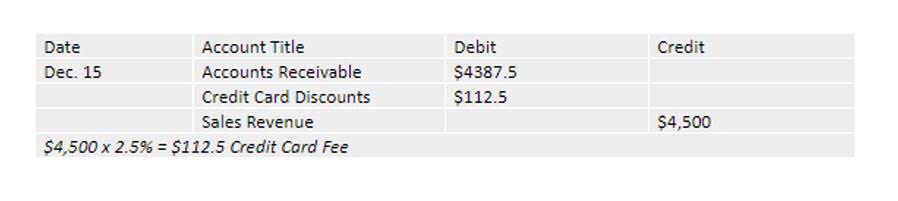
Best Practices for Managing Accounts Payable

The Accounts Receivable and Accounts Payable Aging Reports are critical for a comprehensive view of a company’s cash flow. He is responsible for setting and steering Corcentric’s strategic vision along with its mission of empowering businesses to do more. His leadership has led to a substantial increase in employees, revenue, and the company’s growing presence in the B2B FinTech space. what does accounts payable mean Since the beginning of 2018, Matt has guided the company through three acquisitions that position Corcentric as a global leader in Source-to-Pay and Order-to-Cash solutions. At DTNA Parts, we’re more than just a parts supplier; we’re your trusted partner in keeping your Freightliner, Western Star, Thomas Built Bus, and Detroit products in peak performance.
- Accounts payable is a critical business process through which all companies track and manage their payable obligations efficiently and effectively.
- The ratio indicates the number of times a company pays off its accounts payable during a specific window – usually a year.
- Accounts payable (A/P or AP), or trade payables, is money owed to others for products or services the company has purchased on credit.
- Non-trade payables, such as accrued expenses, dividends payable, or wages payable, are recorded in other accounts in order to more easily identify them.
- Integrating time-tracking can further connect vendor services to billable hours.